
What Makes a High-Efficiency DNA Transfection Reagent: Key Principles Explained
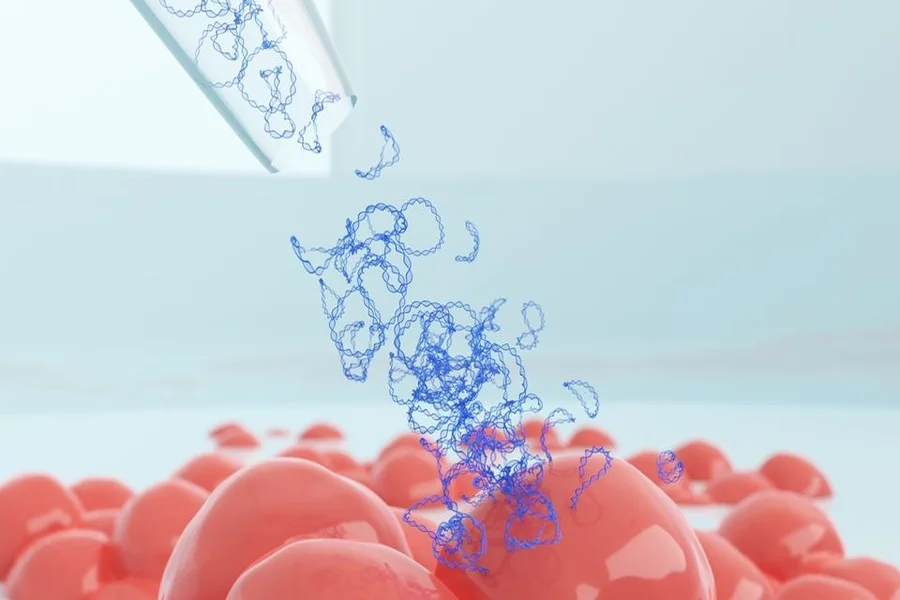
Delivering genetic material into living cells is a foundational requirement in modern molecular biology, drug discovery, and therapeutic research. DNA transfection reagents are central to this process, serving as the bridge between nucleic acids and cellular machinery. Their performance directly affects gene expression levels, reproducibility, and cell viability, making reagent design a matter of both chemistry and biology. We will explore how high-efficiency DNA transfection reagents are defined not by a single property, but by a combination of structural balance, biological compatibility, and experimental adaptability. Understanding these principles helps researchers select tools that align with their cell models and research goals, particularly when working with commercially available systems such as those found in curated reagent collections like Kyfora Bio’s transfection solutions.
Core Principles That Define High-Efficiency DNA Transfection Reagents
- Balanced Chemical Architecture and DNA Binding Behavior
A defining characteristic of a high efficiency DNA transfection reagent is its ability to bind nucleic acids securely while remaining flexible enough to release them once inside the cell. This balance is achieved through careful molecular design, often involving cationic lipids or polymers that interact electrostatically with negatively charged DNA. If binding is too weak, the DNA may degrade before cellular entry; if binding is too strong, intracellular release becomes inefficient, limiting gene expression.
An effective DNA transfection reagent forms stable, nanoscale complexes that protect DNA during delivery and respond to intracellular conditions, such as pH changes or enzymatic activity. This responsiveness ensures that DNA is released at the right time and location. In practice, reagents that consistently form complexes across plasmid sizes and concentrations tend to yield more predictable transfection outcomes. The underlying chemistry must also minimize aggregation, as oversized particles can reduce uptake and increase cellular stress, ultimately lowering functional efficiency.
- Compatibility with Cellular Membranes and Uptake Pathways
Another central principle lies in how a transfection reagent interacts with the cell membrane. Cellular entry typically occurs through endocytic pathways, and reagents must be designed to encourage uptake without causing membrane damage. High-efficiency systems support smooth internalization by mimicking or complementing natural membrane components, allowing cells to engulf the DNA-reagent complex with minimal disruption. Once internalized, endosomal escape becomes a critical step. Reagents that facilitate escape prevent DNA from being trapped and degraded in lysosomes.
This is often achieved through pH-sensitive components that destabilize the endosomal membrane under acidic conditions. Importantly, this process must be controlled; aggressive membrane disruption can compromise cell viability and skew experimental results. Reagents used across diverse cell lines, including sensitive or primary cells, often exhibit refined membrane-interaction profiles that promote uptake while maintaining normal cellular function throughout the experimental timeline.
- Low Cytotoxicity and Preservation of Cellular Physiology
Efficiency cannot be evaluated solely by transfection rates; cell health is equally important. A reagent that delivers DNA effectively but alters cellular metabolism, morphology, or survival introduces confounding variables into downstream analyses. High-efficiency transfection reagents, therefore, prioritize low cytotoxicity to ensure that observed biological effects are driven by the introduced gene rather than by cellular stress responses. This involves reducing inflammatory signaling, limiting oxidative stress, and avoiding long-term interference with cell division.
Researchers often assess this balance through viability assays alongside expression measurements. Reagents that perform well maintain consistent results across repeated experiments and extended expression periods. This principle is especially relevant in functional studies, where subtle changes in gene expression or protein activity must be interpreted accurately. Commercial reagent systems designed for research continuity often emphasize this equilibrium, supporting both transient and longer-term studies without compromising experimental integrity.
- Adaptability Across Cell Types and Experimental Conditions
A high-efficiency DNA transfection reagent must function reliably across varying biological contexts. Different cell types present unique challenges, including differences in membrane composition, division rate, and innate defense mechanisms. Reagents that demonstrate adaptability can be optimized by adjusting simple parameters, such as DNA-to-reagent ratios or incubation times. This flexibility reduces the need for extensive protocol redevelopment when transitioning between models.
Additionally, experimental conditions, such as the presence of serum, culture density, and plasmid complexity, influence performance. Reagents that retain efficiency under these variables offer practical advantages in research environments. Many modern formulations are developed with modular enhancement strategies, allowing researchers to fine-tune delivery without altering core chemistry. This adaptability supports broader application in gene expression studies, reporter assays, and functional screening, making reagent choice a strategic decision rather than a fixed constraint.
- Reproducibility, Scalability, and Experimental Consistency
The final principle that defines high-efficiency DNA transfection reagents is reproducibility at scale. Research demands consistent outcomes, whether experiments are performed once or repeated across multiple batches and laboratories. Reagents that maintain uniform performance across production lots and experimental scales contribute to reliable data generation. This includes compatibility with both small-scale exploratory studies and larger screening workflows. Scalability also involves predictable behavior when DNA quantities or culture volumes change.
Reagents that respond linearly to scaling adjustments simplify experimental planning and reduce variability. Consistency in transfection outcomes strengthens confidence in data interpretation and supports collaboration across research teams. Suppliers that emphasize quality control and standardized formulation processes help ensure that reagent performance aligns with published protocols and internal benchmarks, reinforcing the value of dependable transfection systems in long-term research programs.
High-efficiency DNA transfection reagents are defined by an integrated set of principles rather than a single performance metric. Chemical balance, membrane interaction, cellular compatibility, adaptability, and reproducibility all contribute to effective gene delivery. By focusing on how reagents interact with both DNA and cells, researchers can make informed choices that enhance data quality and experimental confidence. Thoughtful selection of transfection tools, including well-curated reagent collections, enables more controlled studies and clearer biological insights. Ultimately, efficiency is not just about delivery success, but about supporting meaningful, interpretable research results.