
Smart Commercial Construction Investments That Increase Property Value
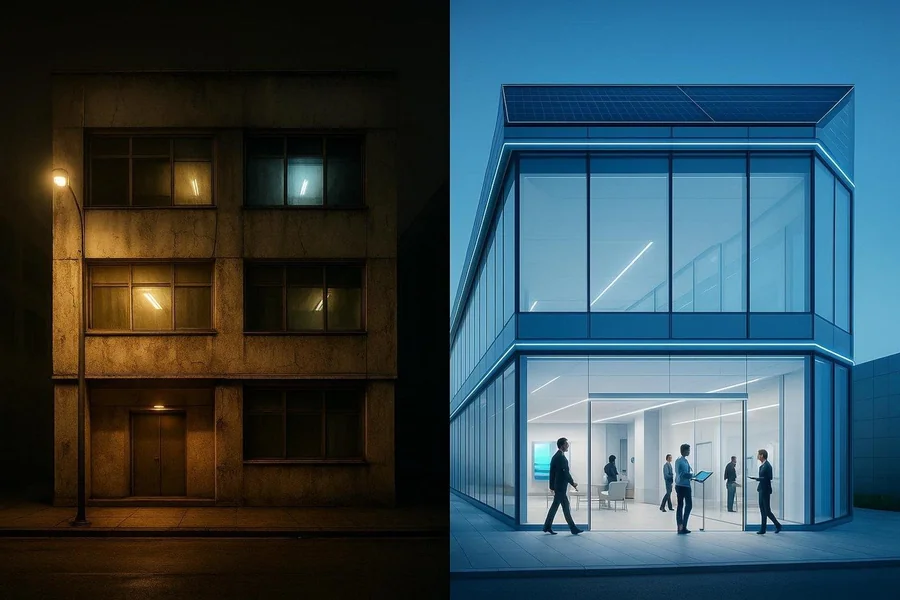
Smart commercial construction investments are strategic building improvements that focus on energy savings, new technology, and structural upgrades to boost net operating income (NOI).
By putting money into systems like advanced Building Management Systems (BMS), upgraded HVAC equipment, and full https://novaconstructionservices.com/services/facade-restorations/, owners can cut operating costs and charge higher rents.
These investments turn a standard property into a connected, “smart” building that meets strict ESG (Environmental, Social, and Governance) standards that modern investors and tenants now expect.
In today’s market, keeping property value high requires a proactive approach, not a reactive one. As cities grow and rules like the Energy Act 2020 become stricter, the difference between updated buildings and older ones keeps growing.
Investing wisely means going beyond basic repairs and focusing on upgrades that deliver strong returns while helping the property stay competitive for many years.
What Are Smart Commercial Construction Investments?
Key Characteristics of Smart Investments in Construction
Smart commercial construction investments are projects that clearly pay off in financial terms. Unlike upgrades that focus only on looks, these projects use data and performance to guide decisions. Many of them focus on “quick wins” that improve how the building runs. A major feature is the link between hardware and software-using sensors and IoT networks to track energy use and building condition in real time. This supports predictive maintenance, which lowers the chance of sudden, expensive breakdowns.
Smart investments are also scalable and flexible. They meet the main needs of current tenants while still being able to adapt to future changes in how people work. This might mean installing modular walls or moving to cloud-based building management. These choices let the building change over time without needing a full rebuild every few years.
How Smart Investments Differ from Traditional Construction Upgrades
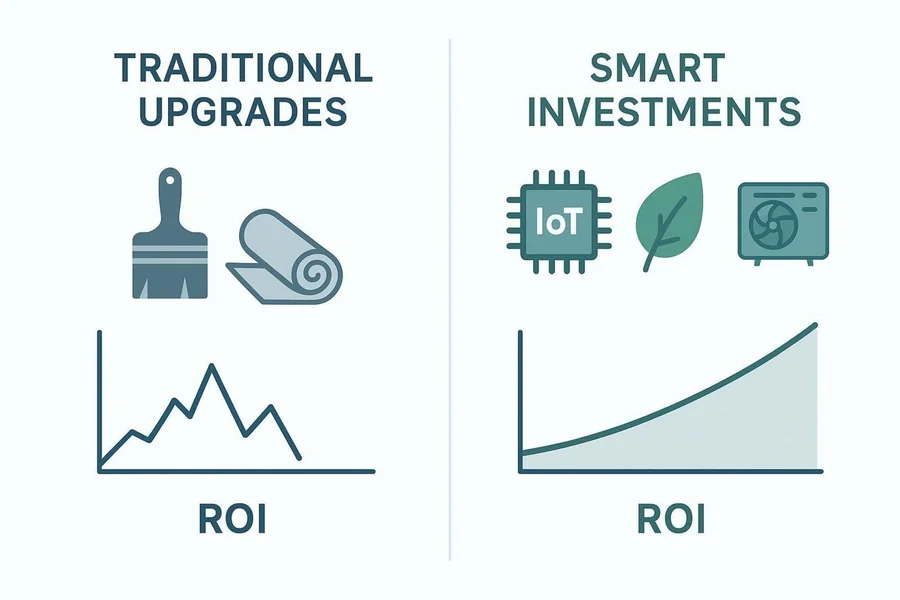
Traditional construction upgrades usually follow a “break-fix” pattern or focus mostly on appearance to help with a fast sale. Fresh paint or new carpet has value, but these are short-term fixes that do not improve how efficiently the building operates.
Smart investments, on the other hand, treat the property as a complete system. They focus on the core infrastructure that affects long-term costs, such as HVAC efficiency or how well the building envelope manages heat and moisture.
Smart investments also use environmental benchmarks. While a standard upgrade might swap an old window for a similar new one, a smart upgrade uses high-performance, weather-resistant products that help with LEED or BREEAM certification. This careful strategy turns the construction budget from a simple expense into a tool for creating value that directly affects cap rate and how attractive the building is in the market.
How Do Smart Commercial Construction Investments Increase Property Value?
The Link Between Building Modernization and ROI
Modernization is a strong driver of Return on Investment (ROI). When an owner upgrades common areas, installs better building systems, or renews the facade, they are doing more than cleaning up appearances; they are repositioning the asset in the market. Updated buildings draw in high-quality tenants who are willing to pay more for efficient, reliable space. Studies show that LEED-certified properties can see rent increases of up to 37% in major cities.
Beyond higher rents, modernization extends the building’s useful life. Replacing old systems with newer technology and durable materials helps owners avoid sudden, large capital expenses caused by major failures. This reliability supports stable income and lower vacancy rates, because tenants are more likely to renew leases in a building that runs smoothly and offers a comfortable environment.
Financial Metrics Used to Measure Impact
Net Operating Income (NOI) is the key number in property value. Smart construction investments raise NOI by cutting operating costs. For example, using BMS data to fine-tune energy use can reduce energy bills by more than 36%. When costs drop and rental income rises, the value of the property grows based on its capitalization rate.
Investors also track ESG performance as part of financial results. A 2025 survey showed that 63% of investors see ESG as a factor that supports higher returns. By earning labels like BREEAM Outstanding, owners can gain rental premiums of about 12% in competitive areas. These figures show that “going green” and “going smart” are now clear business strategies, not just ethical choices.
Which Construction Upgrades Have the Strongest Effect on Commercial Property Value?
Energy-Efficient Systems and Smart Technologies
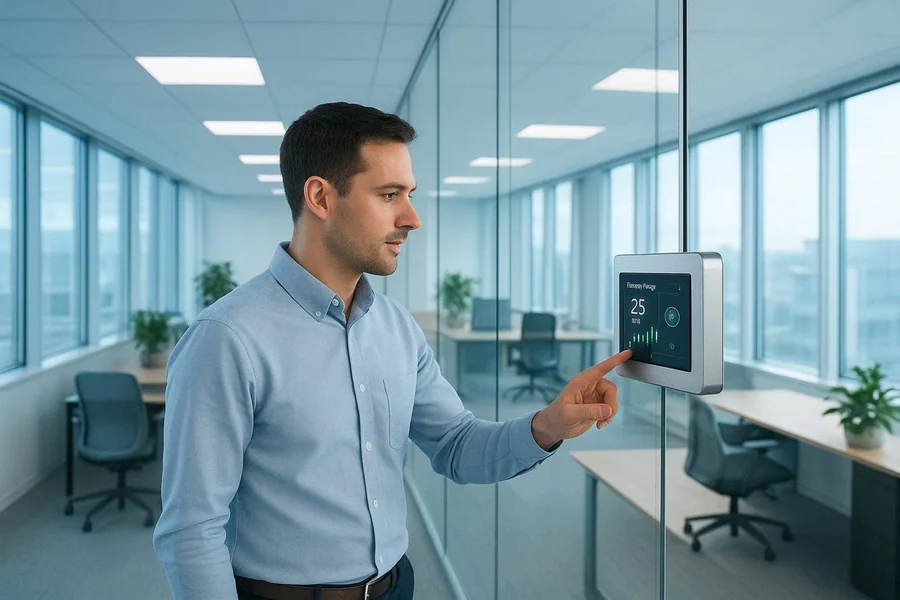
Energy-efficient upgrades are some of the most valuable moves a property owner can make. Replacing old lighting with LEDs and adding programmable thermostats are simple steps with quick payback. Larger projects, like HVAC retrofits, offer even more impact. A weak HVAC system raises utility costs and reduces indoor air quality, which can frustrate tenants. Modern, reliable HVAC systems often pay for themselves through lower energy bills and better tenant comfort and health. Property owners also review supplier options through UK Business Energy to compare commercial energy tariffs and better manage operating costs alongside efficiency upgrades.
Sustainability Improvements and Green Certifications
Sustainability is no longer optional; it is required both for meeting regulations and keeping tenants. Working toward LEED, BREEAM, or WELL certifications shows a long-term focus on building performance. These labels help tenants who need to cut their own Scope 2 and Scope 3 emissions. Upgrades like solar panels, on-site battery storage, and low-flow plumbing fixtures help properties reach these goals while also qualifying owners for tax breaks and grants.
Structural Enhancements: Exterior and Interior Renovations
First impressions matter in commercial real estate. Upgraded lobbies and entry areas create a strong impact for anyone visiting the property. Outside, repaving parking areas, improving landscape design, and using sturdy, weather-resistant materials for roofing and facades all support long-term durability.
Specialized contractors like https://novaconstructionservices.com/ emphasize that high-quality exterior restoration is essential for maintaining both the aesthetic appeal and the structural integrity of these assets. Structural work like stronger roofing systems or high-grade insulation protects the core asset and lowers the chance of sudden repair emergencies later.
Reconfiguration and Repurposing of Space for Market Shifts
After the pandemic, the move toward flexible working changed what tenants expect from office space. Smart owners are converting underused areas into shared amenities or co-working space.
Flexible layouts give tenants room to expand within the building instead of moving elsewhere. This flexibility is a major selling point, especially for small medical, legal, and financial practices that are now a big source of demand in many office markets.
What Are the Benefits of Integrating PropTech in Commercial Properties?
Strategic PropTech Implementation and Value Creation
PropTech (Property Technology) is the core digital layer of a modern smart building. By installing IoT networks and cloud-based controls, owners can fine-tune building conditions in real time. This allows “agentic operations,” where the building automatically adjusts lighting, heating, and cooling based on occupancy levels and weather. This targeted use of technology meets tenant needs while adding social value and financial strength to the asset.
Technology as a Risk Mitigation Tool for Investors
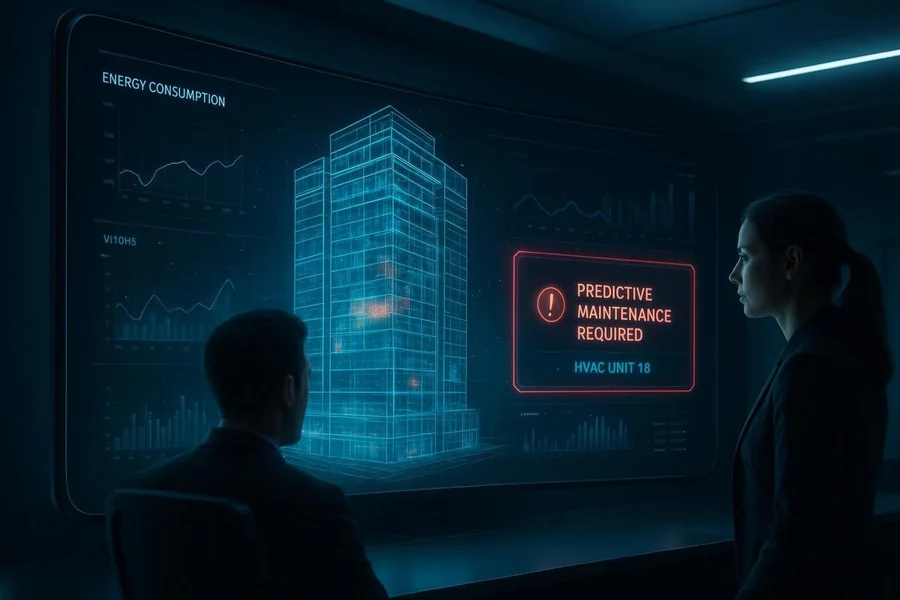
For investors, PropTech is a strong way to reduce risk. Predictive maintenance platforms keep track of equipment performance and warn managers about issues before they turn into major failures. Added security features, like AI-based video monitoring and cloud-managed access control, reduce liabilities and improve safety for everyone in the building. This forward-looking risk management approach makes the property more attractive to lenders and insurers.
Impact on Tenant Experience and Retention
Technology has a direct impact on day-to-day tenant experience. Reliable high-speed internet, smart access tools, and mobile apps for building services make the workplace smoother and more efficient. When tenants feel that comfort, safety, and indoor air quality are taken seriously, they are more likely to recommend the property and renew leases. Lower turnover keeps income steady and reduces leasing and marketing costs for the owner.
How Does Market Timing Affect Smart Construction Investments?
Aligning Upgrades with Market Cycles and Tenant Demand
Knowing where the market is in its cycle-Recovery, Expansion, Hyper-Supply, or Recession-is key to planning investments. During Recovery, owners often focus on cost-saving and efficiency tech to stabilize cash flow. During Expansion, the focus can shift to tenant-focused tech and higher-end amenities to capture rising rents. Smart owners match their construction plans to these cycles so they avoid overspending in weak markets and do not miss higher returns in strong markets.
Adapting to Trends to Maintain Competitive Advantage
The commercial property market keeps changing, and flexibility is central to staying ahead. For example, stronger interest in “healthy buildings” has put HVAC performance and air filtration at the top of many requirement lists. Owners who move quickly on these needs-by adding wellness certifications or ESG-focused PropTech-place their properties ahead of those that keep using older building management approaches.
What Are the Financing and Incentive Options for Smart Construction Investments?
Investment and Financing Advantages for Modernized Properties
Updated buildings often receive better loan terms. Lenders and investors are increasingly cautious about “stranded assets”-properties that are too inefficient or outdated to comply with future rules. By putting money into smart construction, owners show that their assets are ready for the future, which can help them qualify for more favorable interest rates and green financing products. Properties with strong ESG scores also tend to sell faster once they go on the market.
Maximizing Incentives, Grants, and Rebates
Many smart construction projects, especially those that improve energy use, qualify for government incentives at the local, state, or federal level. Programs tied to the Energy Act 2020, for example, offer rebates for HVAC upgrades, solar systems, and high-quality insulation. Using these programs lowers upfront costs and shortens the payback period, which improves the overall return on the project.
How Can Owners Plan and Execute Smart Investments Effectively?
Reviewing Current Property Conditions and Identifying Opportunities
The starting point for any smart construction plan is a detailed check of the existing building. This includes energy audits and consultations with experts to find areas with the strongest potential ROI. Owners should search for waste in current systems and collect data from existing management tools to see where energy and money are being lost. Using this data-led method helps direct the construction budget to the upgrades that matter most.
Budgeting, Contractor Selection, and Project Timeline Strategies
A realistic budget and clear schedule help prevent cost overruns and business interruptions. Choosing a skilled contractor who understands both traditional construction and modern technology integration is key. These experts can recommend the best materials and current systems and help deliver quality work. A solid plan reflects the property’s specific needs while keeping long-term financial goals front and center.
Performance Monitoring and Adjustments Post-Upgrade
Work on a smart investment continues after construction is finished. Ongoing tracking is needed to confirm that upgrades are delivering the expected savings and performance gains. By monitoring energy use, maintenance costs, and tenant feedback, owners can make adjustments and fine-tune settings. This ongoing process keeps the building “smart” and helps it gain value over time as technology and market expectations shift.
Long-Term Value: The Future of Connected and Modernized Commercial Real Estate
Ongoing Benefits for Owners, Tenants, and Investors
The future of commercial real estate is moving toward fully connected buildings. As agentic AI and autonomous operations grow, benefits for owners, tenants, and investors will increase.
Owners will see lower operating costs through automation, tenants will enjoy highly personalized and comfortable workspaces, and investors will hold assets that are more resistant to becoming outdated. Shifting from a simple physical structure to a high-performance technology platform is the main goal of smart construction.
Positioning Properties for Resale and Market Competitiveness
When it is time to sell, a modernized building presents itself as a “turnkey” asset. Buyers are prepared to pay more for properties that already comply with current safety, energy, and environmental standards. By investing in smart construction now, owners position their properties at the top of the market for future sale.
In a highly competitive environment, these forward-looking upgrades are what separate the strongest portfolios from the rest and support long-term success in a constantly changing commercial real estate market.