
The Economics of Clean Candle Manufacturing
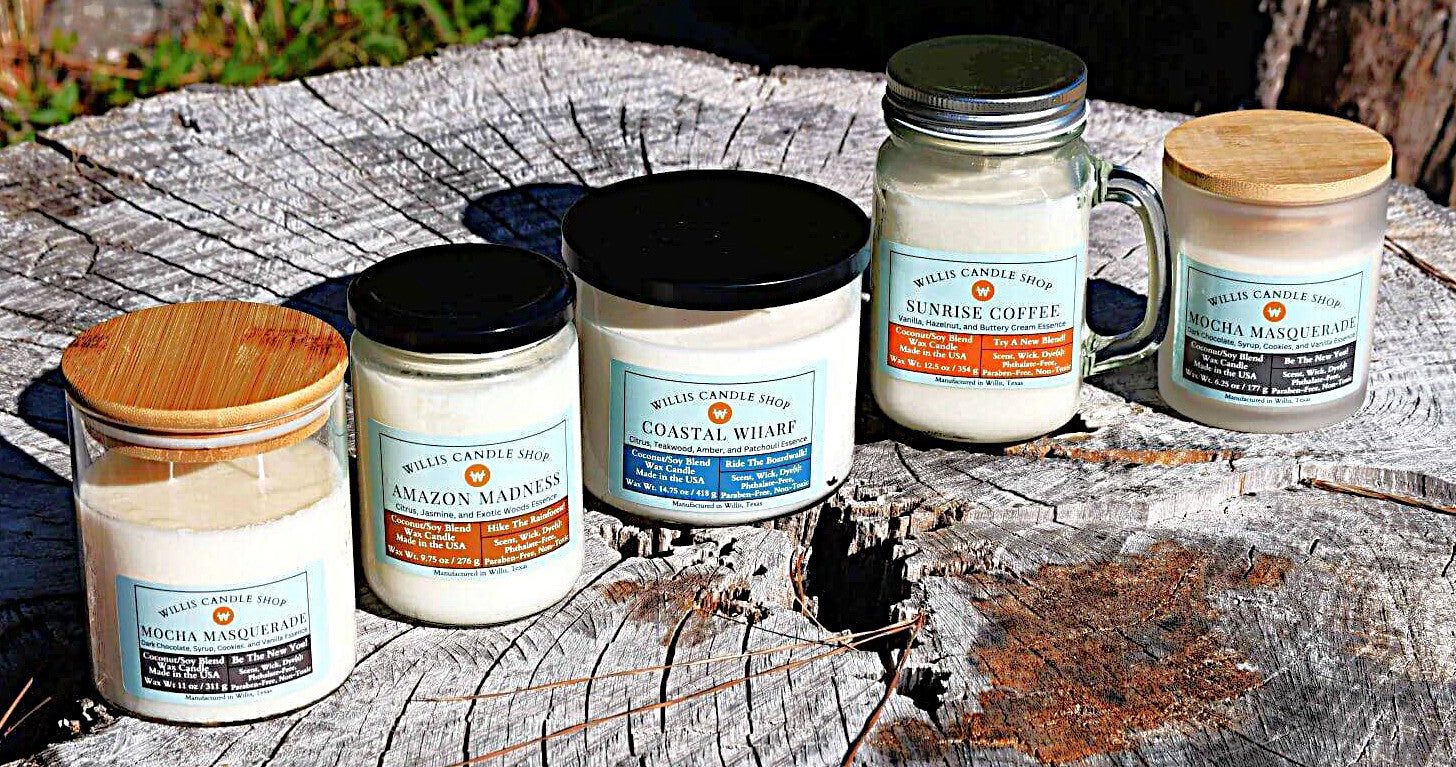
In the evolving landscape of small-batch manufacturing, the intersection of operational integrity and consumer education is where long-term value is created. For the independent business owner, the "cost of goods sold" is often viewed solely through a financial lens—a simple calculation of raw material price against volume. However, in niche markets like home fragrance, the most successful small-to-medium enterprises (SMEs) are those that treat their production philosophy as a core financial asset. By shifting the focus from the lowest-cost inputs to high-performance, engineered materials, manufacturers can secure a market position that is insulated from the volatility of cheap, mass-market competition. This is particularly evident in the candle industry, where the choice between petroleum-based paraffin and sustainable wax matrices—such as soy, coconut, and beeswax—is not merely an ethical decision, but a strategic business move that dictates the brand’s long-term reputation and customer retention rates.
The manufacturing process at a high-integrity firm, such as the Willis Candle Shop, demonstrates how small-scale operations can compete with larger entities by doubling down on transparency. While the mass market remains tethered to paraffin—a low-cost byproduct of petroleum refining—independent vendors are increasingly proving that the "integrity budget" is a valid expenditure. Choosing sustainable waxes does not always result in an immediate reduction in support labor or a lower baseline cost, but it builds an immovable foundation of brand trust. In a market where consumers are becoming increasingly skeptical of corporate "greenwashing," the act of saying exactly what you will do, and then consistently delivering that product, becomes the primary driver of repeat business. It is an investment in the brand’s equity that pays dividends in the form of customer loyalty, which is far more cost-effective than the relentless pursuit of new customer acquisition in a crowded marketplace.
Navigating the Educational Fallacy
Market segmentation is a critical skill for any business owner, particularly when consumer misconceptions are rampant. A persistent challenge in the fragrance industry is the "essential oil fallacy," where a significant portion of the consumer base mistakenly conflates "natural" with "safe." Many customers arrive at the point of sale with a preference for organic essential oils, often assuming these compounds are superior for indoor combustion. From an operational standpoint, this creates an immediate educational hurdle. As any seasoned manufacturer knows, the difference between an oil safe for topical application in a lotion and one safe for a 2,500-degree Fahrenheit flame is vast. The chemical reality is that 90% of the elements on the periodic table can be deadly if misapplied, and botanical oils are no exception when subjected to such extreme thermal stress.
The strategic approach to this market reality is not to engage in combative marketing or to "fight the battle" for every sale. Instead, successful SMEs recognize that there is a segment of the market—the "organic zealot"—for whom price is secondary to a specific label, even if that label is scientifically questionable in practice. Fighting for these customers is rarely profitable. The true growth opportunity lies with the "fence-sitters"—those consumers who are genuinely curious about the difference between paraffin, essential oils, and engineered synthetic fragrance oils, but simply lack the data to make an informed choice. By providing transparent, educational content regarding the thermodynamic stability of synthetic fragrance oils, manufacturers can capture this segment of the market. This strategy respects the customer’s intelligence and builds a foundation of expertise, ensuring that when the customer finally understands the technical advantages of your product, the loyalty they provide is absolute and non-negotiable.
Operational Rigor: Testing for Performance
Quality control in the candle industry is a technical discipline that requires far more than just mixing ingredients and pouring wax. It is an exercise in managing sensory perception and physical performance. One of the most significant, yet rarely discussed, challenges of the manufacturing process is "nose blindness." When a maker spends hours in a workspace shooting wax and fragrance into hundreds of containers, their olfactory system becomes saturated, making accurate assessment of fragrance load impossible. This is why seasoned manufacturers must rely on external testing benchmarks and structured assessment protocols. For instance, the "cold throw"—the ability of a candle to emit scent while unlit—is a subjective but vital metric. A well-formulated candle should exude a noticeable scent from several feet away, signaling a healthy fragrance load without compromising the structural integrity of the wax.
However, the real test of operational excellence is the "hot throw," which requires rigorous, repeatable testing environments. A professional manufacturer will evaluate scent dispersion at various distances, often pushing to the 10-to-20-foot range to determine the true footprint of the candle. This testing must be conducted under diverse environmental conditions—with and without HVAC airflow—to ensure that the product performs consistently across the wide variety of home environments their customers inhabit. In a Fall & Winter Candle Collection, for example, the testing protocols are designed to ensure that the synthetic fragrance oils, which are engineered specifically for high-heat performance, achieve the intended fragrance throw without soot production. This is the difference between a "craft project" and a "manufactured product": one relies on hope and aesthetic appeal, while the other relies on repeatable, data-backed performance metrics.
The Financial Strategy of Consistency
For the SME, the financial strategy of consistency extends well beyond the product itself—it is about the reliability of the supply chain and the precision of the production process. When you operate as a "one-person show," your time is the most expensive resource. By streamlining your testing and production into a set of fixed, predictable metrics—such as an 8% fragrance load, plus or minus a precise margin based on internal testing—you remove the guesswork from your day-to-day operations. This allows the business to scale without losing the quality that defined its early success. You are essentially building a manual of operations that allows for growth while maintaining the integrity that initially attracted your customer base.
In conclusion, the path to a sustainable and profitable business in the candle industry is paved with operational discipline and a commitment to technical truth. By prioritizing the safety of the customer, the integrity of the materials, and the repeatability of the manufacturing process, small business owners can build a competitive advantage that large, mass-market corporations cannot replicate. They cannot match the level of care, the depth of technical knowledge, or the authenticity of the "one-person show" that stands behind every product poured. As the market continues to demand more accountability, those manufacturers who are willing to educate, test, and perform at the highest level will not just survive; they will thrive as the new leaders of the home fragrance economy. The future of this industry belongs to those who view their product as an engineered experience rather than a commodity, ensuring that every flame lit is a testament to the science and the integrity that went into its creation.