
Why Manufacturing Location Matters for Activewear Brands

The location of production is more than a logistical detail, it can shape cost, quality, and brand reputation. While activewear manufacturing is moving globally, Asia still offers clear advantages. Vietnam stands out for its skilled workforce, flexible supply chains, and ability to support brands looking to scale thoughtfully over the long term. Let’s take a closer look at the writing below.
Global Shifts in Activewear Manufacturing
In recent years, the manufacturing map for activewear brands in the US, UK, and Australia has shifted significantly. Production is no longer confined to domestic factories or reliant on a single market. Major brands are making strategic moves to optimize costs and speed.
While labels like “Made in USA” or “Made in Australia” carry strong brand value, doing business locally comes with significant challenges. Labor costs are high, with minimum wages in developed countries far exceeding those in Southeast or South Asia.
Another limitation is specialized infrastructure. Modern activewear requires high-performance fabrics – four-way stretch, moisture-wicking, and seamless construction. Western factories often lack the robust material ecosystems found in many Asian production hubs. For brands developing technically demanding products like leggings, exploring how an experienced legging manufacturer operates within these ecosystems can help clarify why production is increasingly shifting to Asia.
Scalability is also a concern. When a brand experiences rapid growth, finding thousands of skilled local workers quickly is extremely difficult. Shifting production abroad becomes not just a matter of cheaper labor, but a strategic move to access advanced fabric technology, speed up new collection launches, and maintain sustainability standards.
Brands are increasingly willing to look further afield for partners capable of meeting the high expectations of today’s consumers, combining performance, efficiency, and ethical production practices.
Advantages of Producing Activewear in Asia
Asia is not just home to sewing factories, it also offers a complete supporting ecosystem. From high-tech yarn mills to zipper manufacturers and specialized dyeing facilities, most suppliers are located close together. This proximity reduces transportation costs, shortens production cycles, and allows brands to move smoothly from prototypes to finished products. Local sourcing ensures faster, more coordinated production across all stages.
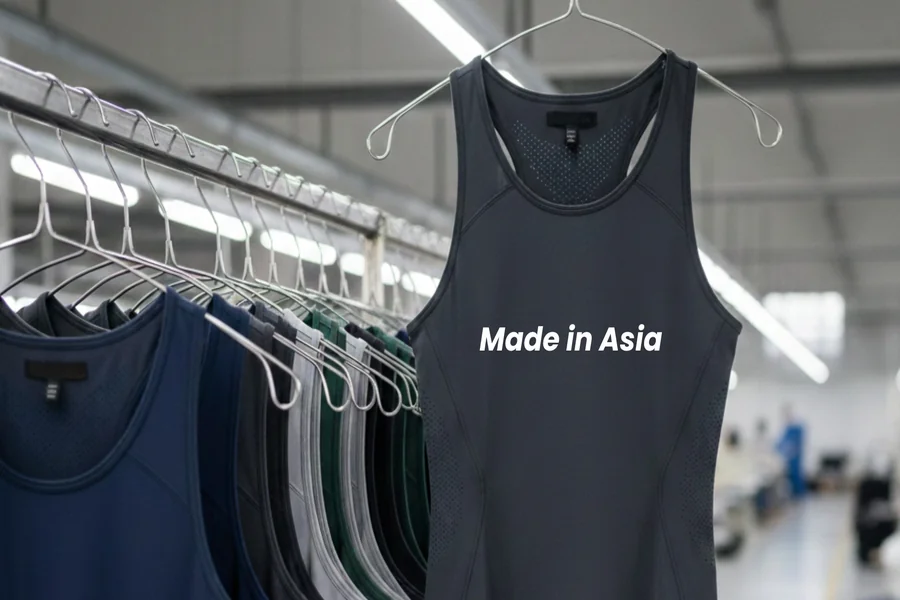
Asian partners have expertise in four-way stretch fabrics and smart fibers that regulate body temperature
Especially, producing in Asia reduces costs not only due to lower labor rates but also because of massive production volumes. Factories are designed to handle millions of units per month, spreading fixed costs like operations, management, and machinery across a huge output. As production scales, the cost per t-shirt or legging drops to levels that small factories in the US or UK cannot achieve. And large Asian factories buy materials in bulk, giving them leverage to secure better prices from suppliers. This allows brands to maintain healthy margins while offering competitive retail prices to capture a broader market.
In addition, activewear production requires highly specialized techniques, such as bonding (heat-fused seams), seamless knitting, and laser cutting. Asian manufacturers have invested billions of dollars in such equipment over decades. While many Western factories focus on traditional sewing, Asian partners have expertise in four-way stretch fabrics and smart fibers that regulate body temperature – capabilities that few others can match.
Why Are Leading Brands Moving Activewear Production to Vietnam?
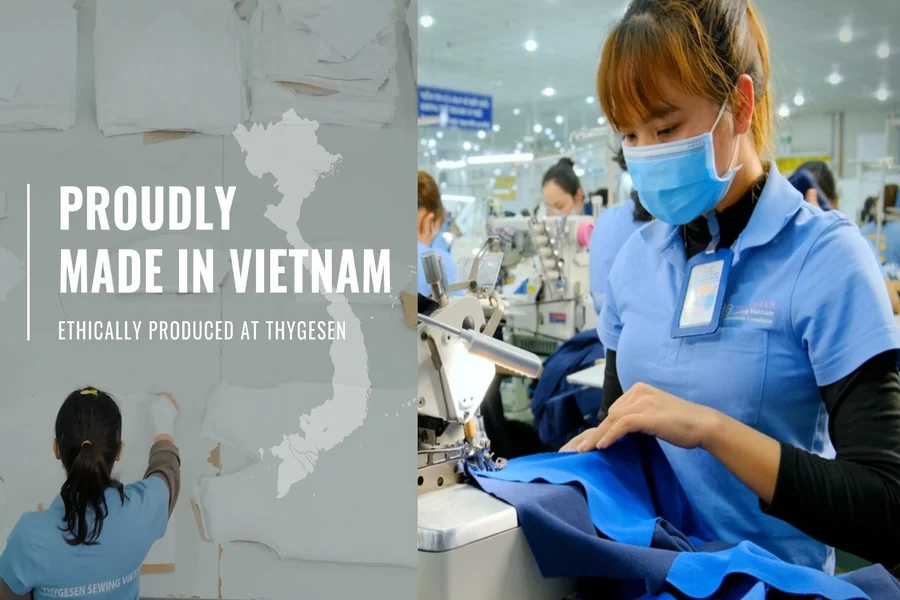
As global brands explore alternatives to Chinese leggings and activewear manufacturers, Vietnam has emerged as a highly competitive and reliable hub
Here’s why many top brands are choosing Vietnam for long-term growth:
- Proven Production Track Record: Global brands like Nike, Adidas, Uniqlo, H&M, and Lululemon already manufacture in Vietnam, demonstrating the country’s capacity to deliver high-quality garments at scale.
- Political Stability & Diplomatic Strength: Vietnam offers a secure business environment with long-term political stability and strong diplomatic relations with major economies, reducing the risk of trade disruptions.
- Strategic Geographic Location: Situated in Southeast Asia, Vietnam is close to major raw material supply chains, enabling faster lead times and more efficient sourcing of fabrics and trims.
- Tariff Advantages: Compared to China, Vietnamese textiles and garments face significantly lower tariffs (around 20% vs. 50% for China), giving brands a cost advantage without compromising quality.
- Free Trade Agreements (FTAs): Vietnam participates in multiple FTAs, including the EU-Vietnam Free Trade Agreement (EVFTA), reducing export tariffs to key markets and improving competitiveness.
- Skilled and Cost-Efficient Workforce: Vietnam combines competitive labor costs with a highly skilled workforce capable of producing everything from basic apparel to high-performance activewear.
- Ethical and Sustainable Manufacturing: Many Vietnamese factories follow strict ethical standards and hold internationally recognized certifications such as SA8000, BSCI, Sedex, WRAP, ISO 14001, and OEKO-TEX, ensuring responsible and sustainable production practices. This same foundation also supports lifestyle-oriented production, allowing brands to gradually expand beyond core activewear and explore collaborations with hoodie manufacturers when building more casual collections.
In conclusion, activewear brands face a key decision: where to produce their garments. Global shifts in manufacturing are changing the landscape, but Asia continues to lead in efficiency and expertise. Vietnam has become a reliable hub, helping brands grow sustainably while maintaining quality and meeting international standards.