
Why Motorsport Collectibles Are Growing in Popularity

Motorsport collectibles are growing fast because fans now connect with the sport in new ways. Shows like Netflix’s Drive to Survive, the rising investment value of rare items, and new tech that proves items are real have all helped. Collecting is no longer just for “hardcore” fans; it has become a worldwide hobby where nostalgia, community, and money all play a part. More people than ever, from many different countries, want to own a real piece of racing history.
As the sound of racing reaches more countries, fans are increasingly looking for physical items that bring them closer to their favorite teams. Whether they are hunting for genuine Ferrari F1 merch to honor the Scuderia, or trying to win race-worn gloves at auction, fans are turning emotions from the track into objects they can hold. This passion shows up in the numbers: experts expect the global sports memorabilia market to hit about $271.2 billion by 2034.
What Drives the Rising Popularity of Motorsport Collectibles?
Cultural Influences and Global Appeal
Motorsport has changed a lot in recent years. The mix of racing and entertainment has brought in record audiences, especially younger viewers. Streaming and social media now give a behind-the-scenes look at paddocks and garages, turning drivers into worldwide stars and every Grand Prix into a major event. With this extra exposure, related items become more attractive, because fans want something that links them to the people they watch every day on TikTok and Instagram.
The “Drive to Survive” effect has also widened the audience, attracting millions of new viewers who enjoy the drama and stories as much as lap times and car setups. This has shifted collecting from a hobby seen as closed-off and elite into something open and community-focused. With so much sports content available, many fans now follow several series in the same weekend, which encourages interest in collectibles across Formula 1, MotoGP, endurance racing, and more.

The Power of Nostalgia and Iconic Moments
Nostalgia is still one of the strongest reasons people collect. A certain model car or a signed poster can bring back a childhood memory or mark a key moment for a favorite team. These items link fans to the past and help them feel again the tension of a last-lap pass or a title-deciding race. In 2026, memorabilia can feel like the closest thing we have to stepping back into those days.
Every item has its own story. It might be a piece of bodywork from a famous race or the program from a fan’s first trip to a circuit. These pieces hold memories and emotions that go far beyond their price tag. Documentaries about legendary drivers and classic races have made this even stronger. After watching those stories, many fans want something physical that connects them to the history they just saw on screen.
Connecting Fans Across Generations
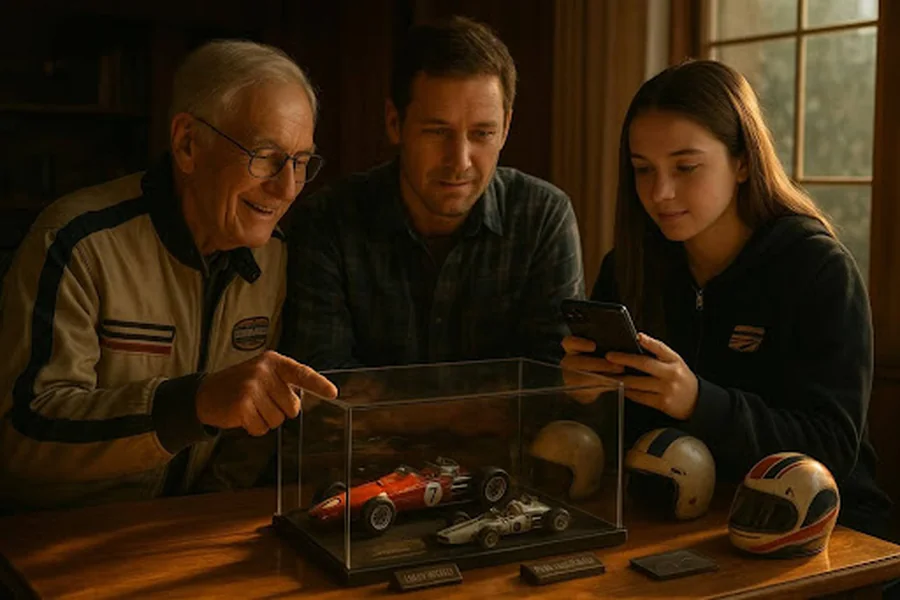
Collecting often runs in families and helps build connections between generations. Parents and grandparents pass items down to younger relatives, giving them a sense of history and shared passion. These pieces start conversations about what older fans see as the “golden years” of racing and help keep those stories alive — especially when items come from recognizable motorsport sources like https://www.topracingshop.com/, which focus on racing culture rather than mass-market souvenirs.
Money trends support this too. A 2024 Bank of America report found that interest in collectibles is very high among Gen Z and Millennials, with 94% of wealthy young people showing interest in the hobby. Many of them grew up with Pokémon cards and online game items, so they are comfortable treating memorabilia both as a way to show who they are and as a serious type of investment.
What Types of Motorsport Collectibles Are Most Sought-After?
Diecast Models and Scaled Cars
Diecast models are still the backbone of motorsport collecting. These scale cars copy real race machines in great detail, allowing fans to enjoy the shapes, wings, and paint schemes that define the sport. Common scales include large 1:18 models for display, mid-sized 1:43, and smaller 1:64 versions. Brands like Bburago offer official F1 models at different prices, so both new and experienced collectors can take part.
Limited-edition models are especially popular. They may show a specific race-winning car or a one-off livery. Many collectors treat caring for these models as a ritual: keeping them dust-free, away from sunlight, and in good condition so the colors and decals stay bright. These are far more than toys; they are tiny examples of design and engineering skill.
Race-Used Gear and Equipment
For serious collectors, items used in real races are the main prize. This group includes parts like carbon-fiber wing sections, steering wheels, driver gloves, or tires that ran in a Grand Prix. Because these items were actually on track, each one is unique. Scratches, rubber marks, and wear all tell the story of what happened in that race, which makes them some of the most valued pieces.
There is also a growing trend of “upcycled” memorabilia. Parts that once would have been thrown away are now turned into useful items like tables, lamps, or clocks. Fans can bring a piece of a race car into their home as furniture or decoration, while still keeping the history of the original part alive.
Signed Memorabilia and Team Apparel
Autographed items, such as signed visors, photos, or team clothing, give a direct personal link to drivers and team members. Wearing or showing a cap signed by a whole team helps fans feel part of something bigger. Limited-edition apparel that marks championship wins or special anniversaries often sells out quickly and can go up in value over time.
Authenticity is key in this area. Buyers are advised to use trusted sellers and to look for hologram tags or official certificates. Owning gear that is genuinely signed by stars like Max Verstappen or Marc Márquez offers a sense of status and closeness that standard, unsigned items cannot match.
Limited Edition Prints and Posters
Motorsport also has a strong visual side, and limited-edition prints bring that into homes and offices. These can be high-quality race photos or artistic drawings and paintings of famous cars and drivers. Often signed by the photographer or artist, they let fans show their passion in a stylish way. Because they are produced in small numbers and look great on the wall, they appeal both to collectors and to people who simply want striking decor that reflects their interests.
How Limited Editions and Rarity Boost Collectible Value
Why Scarcity Fuels Demand
In racing, tiny margins matter, and the same idea applies to collectibles. When a team releases only a small run of items to celebrate a win, many fans chase the same few pieces. This low supply and high demand push prices higher, especially in resale markets where collectors buy, sell, and trade rare items.
Rarer pieces are often tied to special moments, like a driver’s last race, a rookie’s first win, or a team’s first title. Owning something linked to those moments, when only a few exist in the world, turns an ordinary souvenir into a major prize. For some collectors, spotting these chances and buying at the right time can turn a hobby into a profitable side investment.
Special Designs and Brand Collaborations
Unique designs and joint projects between teams and big brands also create highly desirable items. For example, gear created by Red Bull Racing and PUMA often features bold, limited designs you cannot get anywhere else. These pieces cross over into fashion and streetwear, appealing to style-focused buyers as well as racing fans, while still keeping strong links to the races themselves.
How Technology and the Marketplace Are Shaping the Hobby
Global Expansion Through Online Platforms
Online platforms have opened up the hobby to the whole world. Websites and live auction tools like eBay and specialist auction houses give fans access to sellers from many different countries. A collector in Asia can now bid on a rare helmet located in Europe with just a few clicks. This global network has made it much easier to find unusual items and has played a big part in the recent surge of interest.
Digital Authentication and Provenance
In the past, worries about fake items stopped many people from joining the hobby. New technology has made it easier to trust what you are buying. Many official partners now use tools like NFC chips and blockchain records to prove that products are genuine. By scanning a hologram or tag with a smartphone, the owner can check the item’s history and register themselves as the current owner, which protects both the item and its value.
What Makes Collecting Motorsport Memorabilia Rewarding for Fans?
Reliving Historic Races and Celebrating Victories
The emotional side of collecting is often the biggest draw. A model of a winning car can instantly bring back the memory of that race, the tension before the start, and the relief at the checkered flag. For many fans, these objects carry the pride and joy they feel for their favorite teams and drivers, turning distant events on TV into something personal and real.
Community Engagement and Collector Stories
Collecting also builds social connections. At trade fairs, fan events, or online groups, collectors swap stories about how they found a rare item or completed a set. These shared stories and friendships can be just as rewarding as the items themselves. A display shelf at home or work often becomes a talking point, opening the door to new conversations and friendships.
The learning side of collecting is often missed. For younger fans, it can be a hands-on way to learn about money, teaching lessons about supply and demand, pricing, condition, and scarcity. Beyond emotional and financial value, rising incomes in areas such as Asia are bringing many new buyers into the market, which supports long-term growth. On top of that, because collectibles do not always move in the same direction as stock markets, many people see them as a steady way to spread risk and add physical assets to their overall financial plans in a changing global economy.