
Commercial Physical Security: What Businesses Get Right and Wrong About Site Protection
Physical security remains one of the most underinvested categories in commercial facility management, despite being the first line of defence against theft, vandalism, unauthorised access, and in some sectors, targeted attacks on assets and personnel. The category has evolved substantially over the last decade, moving from standalone alarm systems and reactive security personnel toward integrated solutions combining access control, surveillance, perimeter protection, and response coordination. For operations teams approaching site protection with fresh priorities, the useful grounding is what the current threat picture actually looks like, where commercial facilities most commonly fall short, and how to structure a proportionate security posture.
Why Physical Security Is Commonly Underinvested
Three factors explain the consistent gap between how much businesses should spend on physical security and how much they actually spend. Physical security is a cost centre rather than a profit centre, which means it competes with investment priorities that show more visible returns. Incidents are rare in most commercial contexts, which creates a natural tendency to discount the risk until an event happens. And the category is technically complex, with meaningful differences between adequate and inadequate specifications that are not obvious to non-specialists.
The Main Categories of Commercial Physical Security
Modern commercial security solutions typically cover several integrated layers:
- Perimeter protection. Fencing, gates, barriers, and vehicle access controls defining the site boundary.
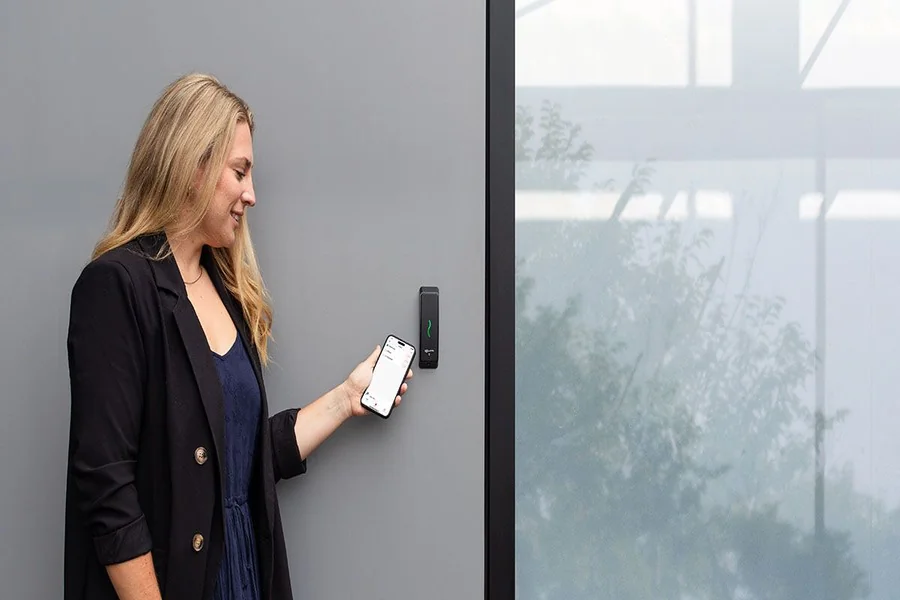
- Access control. Credential-based entry management for doors, gates, and internal zones.
- Surveillance. CCTV systems with recording, monitoring, and analytics capability.
- Intruder detection. Alarms, motion sensors, and door contacts triggering on unauthorised activity.
- Manned security. Personnel deployed for patrol, monitoring, and incident response.
- Remote monitoring. Off-site control rooms coordinating multiple sites and dispatching response.
Effective protection rarely relies on a single layer. Integration across all layers, with consistent policies and response protocols, is what distinguishes a meaningful security posture from a patchwork of components.
Common Gaps in Commercial Site Protection
Audits of commercial facilities consistently reveal recurring weaknesses:
- Outdated CCTV equipment. Legacy analogue cameras producing footage that is useless for identification.
- Poorly configured access control. Credentials issued to former employees, shared credentials, or systems without audit logging.
- Alarm systems without monitored response. Alarms that trigger but produce no action because no one is monitoring.
- Gaps in perimeter coverage. Fencing or barriers that can be bypassed at known weak points.
- Reactive-only security personnel. Staff who respond to incidents but do not patrol or monitor proactively.
- No incident response plan. Staff unclear on what to do when an incident occurs.
Each of these gaps is well understood in the industry, yet the gaps persist because addressing them requires structured investment rather than reactive fixes.
How Threats Have Evolved
The threat picture facing commercial facilities has changed in several ways over the last decade:
- Organised asset theft has become more sophisticated, with criminal groups targeting specific high-value assets identified through reconnaissance.
- Ram-raid and forced entry attacks have grown in sectors holding portable high-value goods, including electronics and luxury retail.
- Internal threats remain the dominant loss category for many sectors, driving the importance of access control with proper audit logging.
- Targeted harassment and violence against specific individuals or facilities has grown in political and sensitive sectors, requiring integrated personal and site protection.
- Cybersecurity overlap has increased as physical systems (access control, CCTV, alarms) now run on networks that can themselves be attacked.
A modern security posture addresses this evolved picture rather than replicating a template from ten years ago.
How to Structure Proportionate Site Protection
A proportionate security posture for a commercial facility typically works through:
- Threat assessment. What assets and personnel are present, and what threats actually apply to this site?
- Risk rating. Which threats are most likely and most consequential?
- Layer selection. Which security layers are needed to address the risks identified?
- Integration planning. How will the layers work together, and who monitors and responds?
- Personnel training. What does site staff need to understand about the security systems?
- Review cadence. How often will the posture be reassessed as threats and the site evolve?
Specialist security providers that operate end-to-end across assessment, design, deployment, and monitoring typically produce more integrated outcomes than vendors supplying only one layer. Firms such as totalsecuredefence.com operate across the full security stack, which reduces the risk of gaps between independently specified subsystems.
International Differences in Physical Security Standards
Commercial security standards vary substantially across markets. UK and European facilities operate under detailed regulatory frameworks covering CCTV data retention, access control privacy, and security personnel licensing. US facilities face a more fragmented state-by-state regulatory picture. Gulf markets have standardised quickly over the last decade, with professional security providers now meeting international technical standards. International businesses operating across multiple markets benefit particularly from security providers holding cross-jurisdictional compliance expertise rather than specialising in a single regulatory environment.
Frequently Asked Questions
How much should a commercial site invest in physical security?
Typical ranges are 0.5 to 2 percent of annual operating cost, varying by sector and threat profile. Sites holding high-value assets or facing specific threats operate at the higher end of the range.
Is manned security still necessary if the site has good CCTV and alarms?
Depending on the threat profile, yes. Electronic systems detect and record, but incident response generally requires on-site or rapidly dispatched personnel.
How often should a security assessment be refreshed?
Annually at minimum, with additional reviews after significant changes to the site, the business, or the threat environment.
Who is liable when a security incident occurs?
Liability depends on the specifics, but sites with poorly maintained or poorly specified security systems can face liability gaps that sites with documented professional security postures do not.
Conclusion
Physical security is an area where the gap between adequate and inadequate protection is often wider than operations teams assume. Proportionate investment, integrated layers, and professional design produce outcomes that stand up both to the threats that actually materialise and to the liability questions that follow if something goes wrong. For commercial facilities worldwide, the useful approach is to treat physical security as a structured engineering problem rather than a product procurement exercise.